


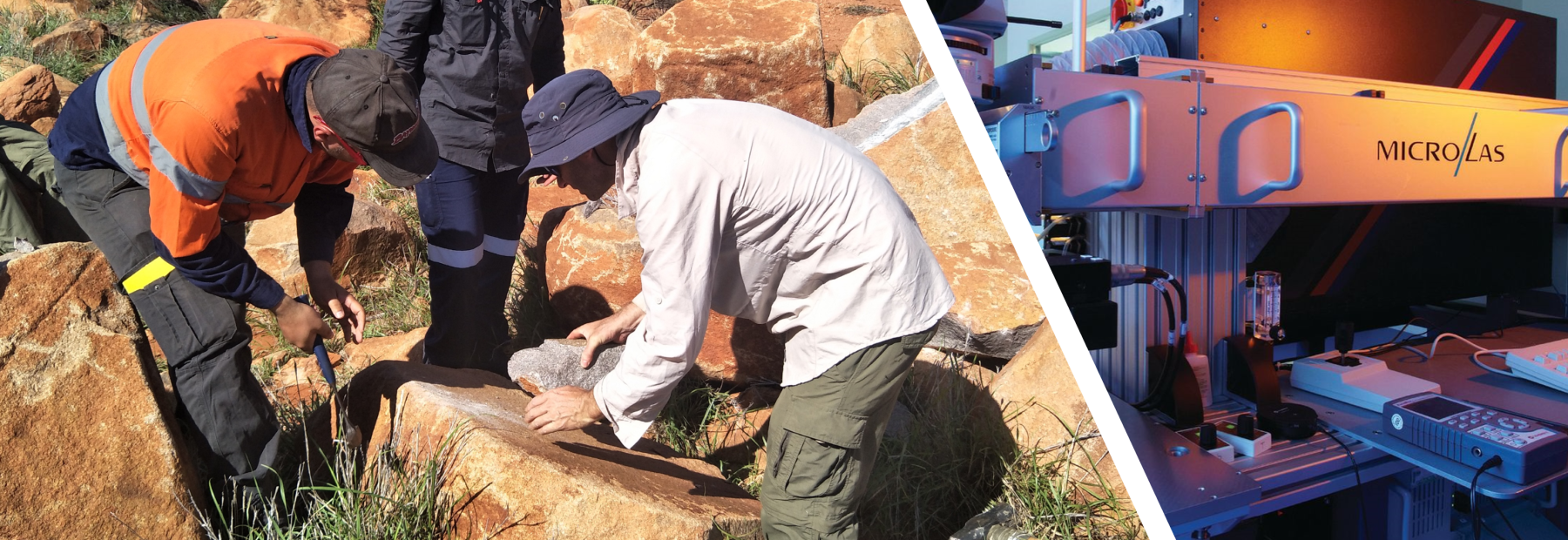
JCU Geoscience staff are actively involved in a wide variety of geoscience research, including characterising and exploring mineral systems, structural and tectonic analysis, mineral chemistry, geophysics, remote sensing, sedimentology and palaeontology.
Research staff work in collaboration with industry, government and other research institutions.
Alica Hoess
Postdoctoral Research Fellow
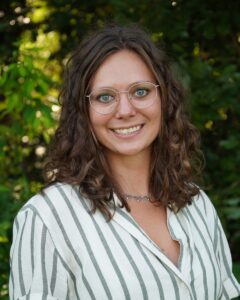
Alica is a geochemist with a strong focus on ore deposit formation. She is particularly interested in understanding the complex interplay of magmatic and hydrothermal processes leading to the enrichment of economically important metals and the evolution of ore deposits. Her analytical expertise encompasses a broad range from whole-rock major and trace element geochemistry, Sr-Nd-Hf-Pb isotopes and geochronology to in situ mineral chemistry, sulfur isotopes and fluid inclusions. While she is very interested in exploring new angles and approaches to (long-standing) research questions in economic geology, she can get enthusiastic about most aspects of ore-forming processes.
Research Interests
• Ore forming processes and deposit formation
• Geochemistry
• Metal transport
• Hydrothermal ore deposits
Current Research Project
• Establishing Neutron Tomography Core Scanning as a novel, non-destructive technique for mineralogical and in situ geochemical analysis to enable efficient detection of critical and strategic metals
Youseph Ibrahim
Lecturer, Structural Geology
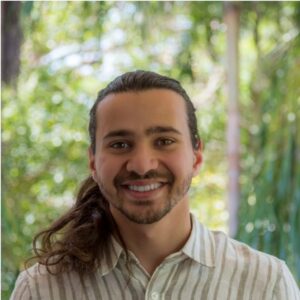
Youseph is a researcher in structural geology, tectonics, and geodynamics. He is interested in understanding the dynamic processes that shape zones of lithospheric deformation. His research combines fieldwork with numerical models that leverage high-performance computers to investigate how these dynamic systems evolve through time. He is also interested in developing digital tools to enhance geological workflows in the field and laboratory.
Research Interests
• Precambrian tectonics
• Rifting and orogenesis
• Gravity-driven deformation
• Interactions between tectonic processes and landscape evolution
• Tectonic processes driving mineral enrichment
Ben Jarihani
Senior Lecturer, Environmental Earth Science
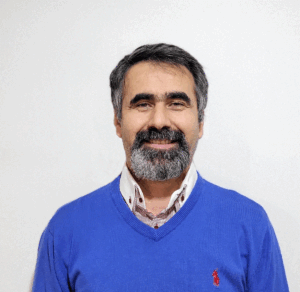
Ben holds a Master’s degree in Water Resources Engineering and Management and a PhD in Spatial Hydrological Science. His research integrates hydrology, geomorphology, and advanced geospatial technologies to address critical challenges in water security, climate variability, and environmental resilience.
Ben specialises in the application of Earth Observation (EO) technologies—including multispectral and hyperspectral satellite imagery, radar remote sensing, satellite altimetry, and LiDAR—for mapping surface water dynamics, soil and vegetation conditions, mineral systems, and landscape change across tropical and dryland environments.
He has extensive experience in UAV-based photogrammetry, airborne and terrestrial LiDAR acquisition, high-resolution topographic and bathymetric modelling, and AI-enabled geospatial analytics. His work supports applications in environmental monitoring, mine rehabilitation, land degradation assessment, watershed management, and climate-risk reduction.
Research Interests
• Water resources assessment
• Flood and drought modelling
• Hydro-geomorphic processes
• Spatial environmental analysis
Anne Kaufmann
Postdoctoral Research Fellow
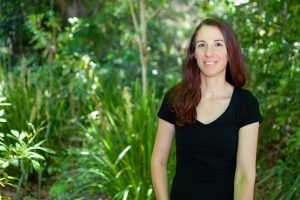
Anne is an analytical geochemist currently focusing on non-traditional stable isotope analysis by MC-ICP-MS applied to new challenges in sustainable resource exploration and processing. Her background covers a broad range of geoscientific research ranging from experimental petrology to investigate S speciation in arc lavas, to studying the element partitioning and isotope fractionation during the magmatic hydrothermal
evolution of crustal intrusions using bulk rock, mineral and (fluid and melt) inclusion analysis.
Anne has a strong interest in development and improvement of analytical techniques for new applications in geochemistry that benefit society and support a transition to a more sustainable future, and is happy to collaborate on projects that align with these goals.
Research Interests
• Non-traditional stable isotope geochemistry
• Sustainable resources
• Planetary evolution
• Magmatic-hydrothermal systems
Current Research Project
• Fingerprinting environmentally sustainable ores using neodymium isotopes
Espen Knutsen
Senior Lecturer, Paleantology
Senior Scientist / Curator of Paleantology, Queensland Museum, Townsville

Avish Kumar
Postdoctoral Research Fellow
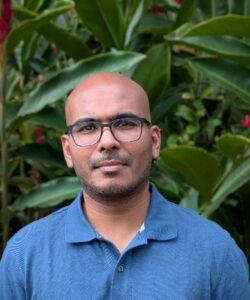
Avish is an economic geologist who applies petrology and geochemistry to investigate the processes controlling ore formation and critical metal enrichment. His research integrates mineral chemistry, stable and radiogenic isotopes, geochronology, and whole-rock geochemistry to understand geological systems across multiple scales.
Avish has experience across a range of deposit styles, with a research focus on critical metals, including:
• Indium, gallium, and germanium in polymetallic tin-tungsten systems
• Cobalt and nickel in iron oxide copper-gold (IOCG) deposits
• Rare earth elements (REE) in iron oxide copper-gold deposits
• Lithium, niobium, and tantalum in pegmatite systems
• Cobalt and thallium in sediment-hosted copper deposits
Avish also specialises in ore-vectoring techniques, where he develops and applies large geochemical datasets to improve exploration targeting for critical metals.
Current Research Project
• Cu and Cu-Au deposits: identifying fingerprints and footprints using trace element geochemistry
Alex McCoy-West
Senior Lecturer, Geochemistry
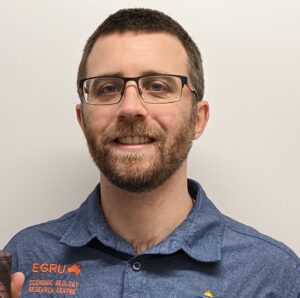
Alex is an isotope geochemist, petrologist, and geologist with extensive experience scrutinising geochemical datasets across a wide range of geological contexts. He possesses analytical expertise in numerous radiogenic (Sr–Nd–Hf–Pb–Os) and emerging stable isotope systems (Fe, Zn, Mo, and Nd). He continues to research and collaborate on diverse projects employing non-traditional stable isotopes to investigate planetary formation, early crustal growth, igneous processes, hydrothermal systems, weathering, and mineralisation.
Research Interests
• Isotope geochemistry (stable and radiogenic)
• Ore deposit formation and vectoring
• Igneous petrology
• Geochemical modelling
Current Research Projects
• Stable metal isotopes in the alteration halo of an epithermal Au-Ag deposit
• Fingerprinting environmentally sustainable ores using neodymium isotopes
• Marine sediment geochemical survey: Coastal waters of southeastern Brazil
• Understanding rare earth element ion adsorption clay deposit formation and element mobility
• Sustainable REE extraction from Australian ores using environmentally friendly reagents, advanced characterisation techniques and geological knowledge
Helen McCoy-West
Senior Lecturer, Igneous Petrology and Critical Resources
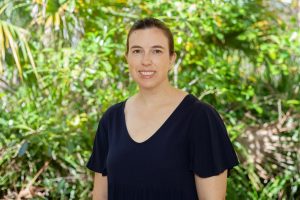
Helen is an igneous petrologist and economic geologist with a research interest in the relationship between magmatism and ore deposit formation. Her research focuses on petrology, geochemistry, and geochronology.
Research Interests
• Hydrothermal ore deposits
• Igneous petrology
• Geochronology
• Geochemistry
Current Research Projects
• Stable metal isotopes in the alteration halo of an epithermal Au-Ag deposit
• Fingerprinting environmentally sustainable ores using neodymium isotopes
• Understanding rare earth element ion adsorption clay deposit formation and element mobility
• Rare Earth Element characterisation in source rocks and deposits in Queensland
• Sustainable REE extraction from Australian ores using environmentally friendly reagents, advanced characterisation techniques and geological knowledge
Stuart Russell
Postdoctoral Research Fellow
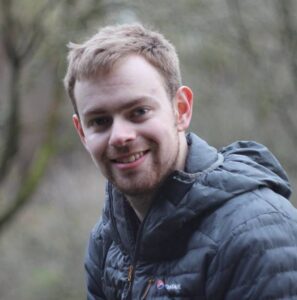
Stuart is a geophysicist who completed a PhD in global seismology at the University of Cambridge, and postdoctoral research on computational modelling of the global seismic wavefield at the University of Münster in Germany. His research interests encompass all things geophysical, from broad scale planetary structure to ore bodies and economic geology.
Research Interests
• Geophysics
• Planetary structure
• Computational modelling and machine learning
• Geophysics in mineral exploration
Current Research Project
• Optimising the geophysical ore body model to aid critical minerals discovery
Ioan Sanislav
Associate Professor, Economic and Structural Geology
Head, Economic Geology Research Centre
Lead, JCU Resources Technology and Critical Minerals Trailblazer
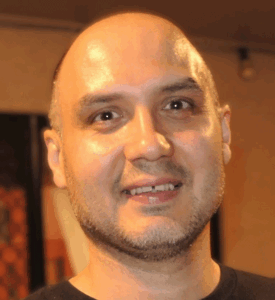
Ioan is a structural and economic geologist who works on a range of collaborative projects with industry and government. Projects are located in Australia and overseas, including the Mount Isa region, northeast Queensland, the Archean Tanzanian Craton, and north east Egypt. Research areas include lode gold, IOCG, SEDEX, Cu-Au, manganese, and epithermal and porphyry style mineralisation.
Research Interests:
• Field geology and mapping
• Structural controls on mineralisation
• Mineral footprint and vectoring tools
• Archean deformation and geology
• Thermodynamic modelling and metamorphism
Current Research Projects
• Cu and Cu-Au deposits: identifying fingerprints and footprints using trace element geochemistry
• Critical minerals in northeast Queensland
• Zircon geochemistry as a vector to mineralisation in the Geita gold deposits, Tanzania
• Potential for sediment-hosted base metal mineralisation in the southern part of the Western Succession, Mount Isa Inlier
• Sustainable REE extraction from Australian ores using environmentally friendly reagents, advanced characterisation techniques and geological knowledge
Romain Vaucher
Senior Lecturer, Sedimentology
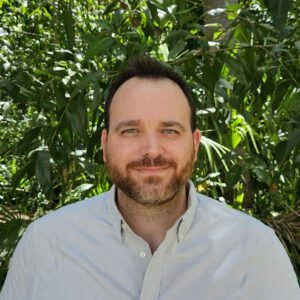
Romain is a clastic sedimentologist. His work covers a wide temporal range (Palaeozoic, Mesozoic, Cenozoic, and modern), geological settings (passive and active sedimentary basins), and geographical locations (Australia, Argentina, Canada, China, France, Morocco, Spain, and Taiwan). In short, his research focuses on the dynamics of sedimentary systems and their response to (paleo)climate fluctuations. He aims to track how these fluctuations affect sedimentary processes at various scales, from bedform development at small scales to basin fill at larger scales, and explore their impact on the distribution and preservation of (paleo)biota within these systems.
Current Research Project
• Cascading impacts of extreme rainfall on landscapes and biodiversity
Lauren Waszek
Senior Lecturer, Physics
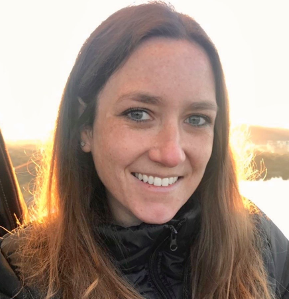
Lauren is a global seismologist, researching the seismic properties of Earth’s deep interior from the inner core to the upper mantle.
Research Interests
• The relationship between seismic structures and their geodynamical origin
• Properties and characteristics of mantle transition zone and mid-mantle discontinuities
Current Research Project
• Optimising the geophysical ore body model to aid critical minerals discovery
Daniel Wiemer
Lecturer, Economic and Structural Geology
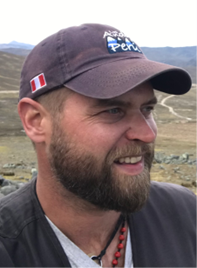
Daniel is an exploration geologist with over 14 years experience and expertise in field-based and analytical structural geology/geodynamics, geochronology, metamorphic and magmatic petrology, and geochemistry/isotope geochemistry. He uses his skills to advance both fundamental and applied mineral systems science, integrating multi-scale and multi-methodological approaches with emphasis on industry-relevant exploration workflows and targeting strategies. Daniel is the developer and project leader of the AMIRA-managed Geodynamic Andes eXploration Initiative (GAXI). He currently teaches undergraduate subjects in Structural Geology & Tectonics and Ore Deposits & Critical Mineral Exploration, and he supervises/co-supervises various PhD and MSc students.
Research Interests
• Earth’s tectonic modes and crust forming processes from the early Archean to the present
• Applicable industry-relevant mineral systems science and predictive exploration targeting
• Multi-proxy structural and chemical-isotopic bulk-rock and zirconology-based exploration tools
• Controls on the genesis and the spatial-temporal distribution of magmatic-hydrothermal mineral resources
• Role of tectonic inheritance across temporal and spatial scales, focussing on the nature, origin and reactivation of trans-lithospheric faults
• Mantle-crust interactions, source reservoirs, and dynamic fertility development in the context of tectonic histories and transient geodynamics
• Complex system theory with focus on the emergence of mineral deposit superclusters
Current Research Projects
• Geodynamic Andes eXploration Initiative (GAXI), AMIRA Global Project 1335
• Tectonic Reconstruction of the Barnard Province, Northeast Queensland
• Zircon as a Tool for Gold Exploration in the Eastern Cordillera of Peru
• Early Earth Geodynamics and the Onset of Plate Tectonics


We acknowledge Aboriginal People and Torres Strait Islander People as the first inhabitants of the nation, and acknowledge Traditional Custodians of the Australian lands where our staff and students live, learn and work. Aboriginal and Torres Strait Islander peoples are advised that this site may contain names, images or voices of people who have passed away.